
Two Proposals, One Opportunity for Hawaiʻi's Beaches
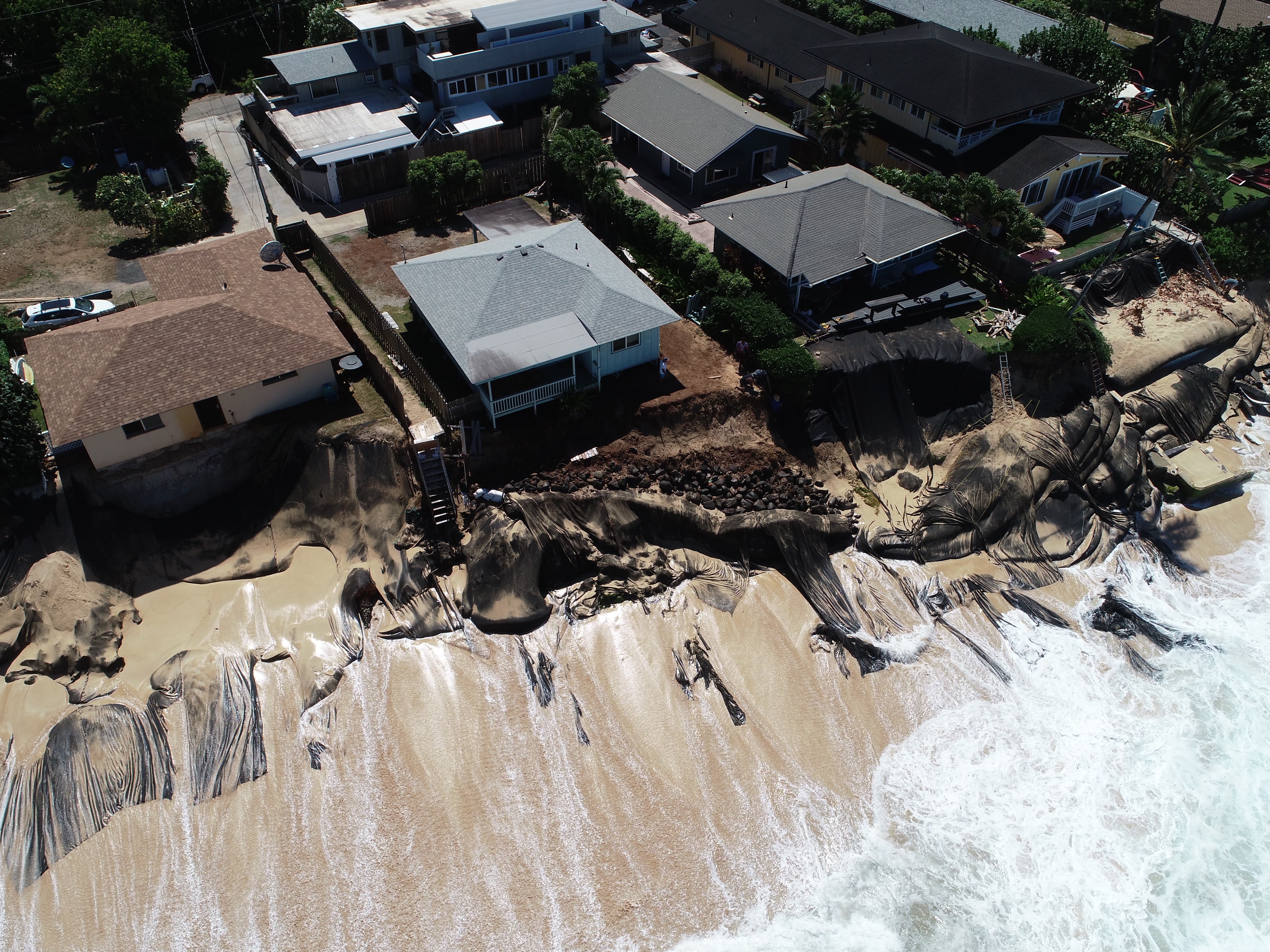
PC: DLNR OCCL drone photo
Hawaiʻi is losing its beaches, and the way our regulatory system has historically responded to coastal erosion has too often made the problem worse.
For decades, Hawaiʻi has relied on emergency shoreline protection and other short sighted fixes to address chronic coastal hazards. While these measures may protect private property in the short term, they can come at the expense of our public trust beaches. In this way, we have been treating the symptoms not the underlying illness. Hawaiʻi needs a balance of stronger guardrails against perpetual short-term fixes, alongside clear pathways and incentives for long-term solutions. Right now, that balance is missing, and our beaches are paying the price.
The consequences are already visible. Roughly 70% of beaches studied on Kauaʻi, Oʻahu, and Maui have experienced long-term erosion, and more than 13 miles of beach have disappeared over the past century, nearly all in areas fronting shoreline armoring. As sea levels rise and coastal hazards intensify, more homes, roads, and infrastructure will be threatened, increasing pressure for emergency sandbags, seawalls, and other temporary measures. Without changing how we respond, we risk accelerating the very beach loss we're trying to prevent.
Now, two significant regulatory proposals offer an opportunity to tip the scales toward better beach protection and long-term adaptation.
The Department of Land and Natural Resources (DLNR), through its Office of Conservation and Coastal Lands (OCCL), is advancing:
- Updates to Hawaiʻi Administrative Rules (HAR) Chapter 13-5: A comprehensive effort to update and modernize the state's Conservation District rules, which have not undergone a major revision since 2011. Since then, Hawaiʻi has faced escalating shoreline erosion, sea-level rise, and coastal hazards, exposing the limitations of regulations that have not kept pace with changing coastal conditions. The proposed amendments offer an important opportunity to bring these rules in line with the challenges facing our shorelines today and into the future.
- A new Small-Scale Beach Restoration (SSBR) Program: A proposed replacement for the existing Small-Scale Beach Nourishment (SSBN) Program that aims to establish clearer standards and safeguards for beach management activities, including nourishment, sand pushing, backpassing, dune restoration, and temporary groins.
Together, these proposals offer an important opportunity to shift Hawaiʻi away from a reactive system that prioritizes protecting development in place and toward one that better protects public beaches, manages coastal resources strategically, and advances long-term adaptation. However, as currently written, both proposals need stronger safeguards to ensure they deliver on that promise.
Through Surfrider Foundation's Hawaiʻi Beaches Forever initiative, we're working to ensure these changes reduce reliance on short-term fixes, strengthen protections for public beaches, and create meaningful pathways toward long-term shoreline adaptation. These are lengthy, complex proposals, and Surfrider has spent considerable time reviewing the drafts, evaluating their implications, and identifying opportunities for improvement.
Below, we've summarized the most significant changes, what we support, and where stronger safeguards are needed. This is by no means a comprehensive review. For those who want to take a deeper dive, visit OCCL's proposed rule changes website, which includes the full proposed amendments, informational flyers, and additional resources.
How Are These Two Processes Related?
Both proposals are being advanced by OCCL as part of a broader effort to modernize Hawaiʻi's Conservation District regulations, but they are distinct processes with separate approval requirements.
The HAR Chapter 13-5 amendments are proceeding through formal administrative rulemaking, including public hearings and opportunities for written testimony. The proposed SSBR program is being developed alongside those amendments but requires separate approval from the Board of Land and Natural Resources (BLNR). If the new SSBR program is not approved, the existing SSBN program remains in place.
Although the proposals address different activities, they are closely connected. One deals in part with how Hawaiʻi responds when shoreline development is threatened by erosion; the other addresses how we manage and restore beaches themselves.
Both raise the same fundamental question: Are our current approaches helping protect Hawaiʻi's beaches for the future, or are we relying on short-term measures that delay the difficult decisions required for long-term adaptation?
These are lengthy, complex proposals, and Surfrider has spent considerable time reviewing the draft rules, evaluating their implications for Hawaiʻi's beaches, and identifying opportunities for improvement. Below, we've highlighted the most significant changes and our key recommendations, but this is by no means a comprehensive review.
For those who want to take a deeper dive, we encourage you to visit OCCL's proposed rule changes website, where you can find the full proposed amendments, informational flyers, and additional resources to help understand what's being proposed.
Take Action: Help Shape Hawaiʻi's New Shoreline Rules
Hawaiʻi's beaches are a public trust resource, and your voice matters in shaping how they're protected and managed.
Speak Up for Stronger Conservation District Rules
OCCL is holding public hearings on the proposed HAR Chapter 13-5 amendments through November 19, 2026, and accepting written testimony through November 30, 2026.
We encourage community members to participate in the public hearings or submit written testimony calling for stronger safeguards that ensure emergency shoreline protection leads to long-term adaptation rather than permanent beach loss.
Learn how to submit testimony through our Better Rules for Hawaiʻi's Beaches campaign
Help Shape the Small-Scale Beach Restoration Program
OCCL is also seeking input on the proposed SSBR program, including what meaningful community engagement requirements should look like.
This is an opportunity to advocate for stronger environmental safeguards, meaningful public participation, and beach management practices that support long-term adaptation.
Learn more and get involved through our Improve Small Scale Beach Restoration in Hawaiʻi campaign
Read on to learn more about both proposals, what they get right, where they fall short, and Surfrider's recommendations to help inform your testimony.
Better Rules for Hawaiʻi's Beaches: Moving Beyond Emergency Armoring
Why Hawaiʻi Needs Stronger Shoreline Rules
Hawaiʻi's beaches are dynamic, living systems, but development is not. Beaches naturally erode, recover, and migrate over time. Development and shoreline armoring can cut off sand reserves that replenish beaches, increase erosion and scouring, and prevent shorelines from moving inland as seas rise.
The result is coastal squeeze: beaches become trapped between the advancing ocean and hardened development, gradually narrowing or disappearing altogether.
Climate change is amplifying these challenges. As sea levels rise, waves reach farther inland, increasing coastal flooding, erosion, and risks to homes, roads, and infrastructure. Extreme weather events compound these impacts, offering a glimpse of the challenges coastal communities will increasingly face.
Emergency shoreline protection may be necessary when public health and safety are at risk. Property owners understandably want to protect their homes and infrastructure. But Hawaiʻi's emergency permitting framework has historically allowed temporary sandbags and erosion barriers to remain in place for years, sometimes decades, through repeated extensions or beyond permit expiration dates.
While these measures may protect private property in the short term, they can come at the expense of our public trust beaches—contributing to the very beach loss our shoreline laws are intended to prevent.
As coastal hazards intensify, we face a critical question: Will our response to one disaster contribute to another—the permanent loss of our beaches?
What's Changing Under HAR Chapter 13-5?
The proposed amendments represent an important step toward modernizing Hawaiʻi's shoreline regulations. They introduce stronger safeguards for coastal development, improve oversight of emergency shoreline protection, and place greater emphasis on addressing coastal hazards and long-term adaptation.
Some of the most significant improvements include:
- Limiting new development in vulnerable areas: The amendments propose removing single-family residences as an allowable land use in the Conservation District's Limited Subzone, which includes lands particularly vulnerable to flooding, erosion, sea-level rise, and other natural hazards. They also establish stronger residential development standards in coastal hazard areas, including restrictions on where homes can be built, limits on development size, and updated shoreline setbacks.
- Strengthening emergency shoreline permitting: The amendments seek to better distinguish genuine emergencies from ongoing hazardous conditions, limit how long emergency shoreline protection can remain in place, and require greater oversight through the Board of Land and Natural Resources (BLNR) when continued temporary protection is sought.
- Encouraging long-term adaptation: The proposed rules introduce coastal hazard mitigation disclosure requirements and place greater emphasis on long-term solutions, including relocation and eventual removal of temporary shoreline protection, rather than relying indefinitely on emergency measures.
- Strengthening coastal resource protections: The amendments expand consideration of coastal hazards, natural shoreline processes, beaches, and public access in permitting decisions, while also updating standards for existing structures and streamlining certain environmental restoration activities.
Together, these changes represent an important shift toward preventing future coastal hazards rather than simply responding to them after development is threatened. Surfrider supports this direction, but important gaps remain—particularly in ensuring temporary shoreline protection actually leads to long-term adaptation.
Where Surfrider Wants Stronger Safeguards
Our biggest concern is the proposed new pathway allowing temporary shoreline hardening to remain in place beyond the emergency period under an “ongoing hazardous condition.”
The proposed rules require applicants to demonstrate a “concerted effort” toward a long-term solution that would allow removal, but the standard is ambiguous and largely discretionary. Without clear safeguards, temporary structures could remain in place indefinitely while planning continues without meaningful progress toward implementation.
Emergency protection needs to be a bridge to long-term adaptation, not a bridge to nowhere.
The proposed amendments are a step in the right direction, but stronger safeguards are needed to ensure temporary protection doesn't become the path of least resistance. Without clear deadlines, enforceable adaptation requirements, and financial accountability, property owners may have little incentive to move beyond short-term fixes. The rules must make long-term adaptation a real and achievable expectation, rather than an indefinite planning exercise.
Surfrider is calling for stronger safeguards in four key areas:
Tie Emergency Shoreline Protection to Long-Term Adaptation from the Outset
Emergency and temporary shoreline protection must be tied to concrete requirements for long-term adaptation and eventual removal. The proposed “concerted effort” standard needs enforceable milestones and clear off-ramps, beginning during the emergency permit period, with continued authorization contingent on demonstrated progress and compliance.
- Establish early planning and action requirements, such as requiring a feasible, financially viable long-term adaptation and removal plan within 120 days of emergency installation.
- Require coordination with county agencies where relocation or removal of threatened structures is feasible.
- Make continued temporary protection contingent on measurable progress toward implementing long-term solutions, not simply a commitment to begin planning.
- Establish enforceable deadlines, consequences for noncompliance, and removal requirements when property owners fail to follow through.
- Prevent repeated emergency permits from resetting the clock for the same property and underlying ongoing hazard, including when ownership changes or structures are repaired or reconstructed.
Strengthen Coastal Resource Protections, Monitoring, and Accountability
The proposed rules recognize the importance of protecting beaches, dunes

By Hanna Lilley
Prior to her role as Hawai`i Regional Manager and Maui Fire Response Coordinator, Hanna has had a long history in non-profit leadership and environmental conservation in Hawai`i. With a Bachelor's degree in Biology she moved to Maui in 2013 where she spent the next decade working as a restoration technician.